
-

Try advanced features for free
Get Smarter responses, upload files, create images, and more by logging in.
Log In Sign up & Earn $5

SearchGPT vs Traditional Search Engines: Key Differences
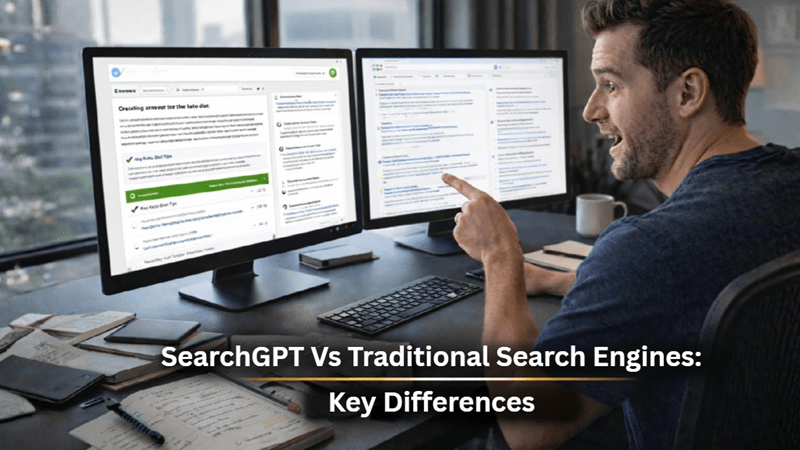
The way we search for information online is undergoing a powerful transformation. While traditional search engines have long been the go-to solution for finding websites and answers, a new approach, SearchGPT, is redefining the experience with smarter, more intuitive interactions. Instead of simply listing links, it focuses on understanding user intent and delivering direct, meaningful responses. This shift is changing how individuals and businesses approach digital visibility. In this blog, we explore the key differences between SearchGPT and traditional search engines, helping you understand how this evolution impacts the future of search and why adapting to it is more important than ever.
What Is SearchGPT?
SearchGPT represents a new generation of search technology powered by advanced artificial intelligence. Instead of simply displaying a list of links based on keywords, it understands user intent, context, and conversational queries to deliver more direct, meaningful responses.
Unlike conventional systems, SearchGPT processes language in a human-like manner. It can interpret complex questions, follow context across multiple queries, and provide synthesized answers rather than forcing users to sift through multiple web pages. This evolution marks a significant leap in how users interact with information online. To understand this evolution more clearly, it also helps to look at GPT search and how it is reshaping the way users discover information online.
What Are Traditional Search Engines?
Traditional search engines have long relied on algorithms that index web pages and rank them based on relevance, authority, and keyword usage. When a user enters a query, the engine scans its database and presents a list of links ranked according to its criteria.
While effective, this method requires users to manually browse through results, compare sources, and extract the information they need. It is a system built on retrieval rather than understanding.
SearchGPT vs Traditional Search Engines: Core Differences

The searchgpt vs search engines comparison becomes clear when examining how each system handles user queries and delivers results.
Understanding vs Matching
Traditional search engines primarily match keywords. If a query contains specific terms, the system retrieves pages that include those words. This often leads to results that may not fully address the user's intent.
SearchGPT, on the other hand, focuses on understanding the meaning behind the query. It interprets context, tone, and intent, providing answers that align more closely with what the user is actually asking.
Conversational Interaction
One of the biggest distinctions in the traditional search engines vs. SearchGPT debate is interaction style. Traditional systems operate in a static, one-query-at-a-time format. Each search is independent, and users must refine their queries repeatedly.
SearchGPT introduces a conversational approach. Users can ask follow-up questions, clarify their intent, and refine results within the same interaction. This creates a smoother, more natural experience that mirrors human conversation. For users looking to get better results from AI-driven queries, learning to level up your ChatGPT searches can make conversational search even more effective.
Result Delivery
Traditional search engines provide a list of links, leaving the responsibility of finding the right information to the user. This process can be time-consuming and often requires navigating multiple sources.
SearchGPT delivers direct answers. It compiles information into a cohesive response, saving time and effort. This shift from link-based results to answer-based responses is a defining factor in the whats the difference between SearchGPT vs search engines discussion.
Personalization and Context Awareness
SearchGPT can retain context within a conversation, allowing it to provide more personalized and relevant responses. It adapts to user behavior and preferences in real time.
Traditional search engines offer limited personalization, mostly based on past search history and location. They lack the deep contextual understanding that AI-driven systems provide.
Why This Shift Matters for Businesses
The transition from traditional search engines to AI-driven systems like SearchGPT is not just a technological upgrade; it is a fundamental change in how visibility and engagement are achieved online.
Businesses that rely solely on traditional SEO strategies may find it increasingly challenging to maintain visibility in an AI-first search environment. The way content is created, structured, and optimized must evolve to align with how SearchGPT interprets and delivers information. The growing role of intelligent tools in everyday behavior becomes even clearer when looking at real-world examples of AI in day-to-day life and how they are influencing user expectations online.
Professional expertise becomes essential in this scenario. Adapting to these changes requires a deep understanding of both traditional search principles and emerging AI-driven methodologies.
Content Strategy in the Era of SearchGPT
As the search engine vs traditional search engines landscape evolves, content strategy must also transform. It is no longer enough to focus only on keywords and backlinks. Content must be designed to answer questions clearly, provide value, and align with user intent. This shift is also closely connected to the broader impact of AI in the workplace, where smarter tools are changing how people research, create, and make decisions.
SearchGPT favors content that is informative, well-structured, and contextually relevant. This means businesses need to invest in high-quality content creation that speaks directly to user needs.
Professional services play a crucial role here. Crafting content that performs well in both traditional and AI-driven search environments requires expertise, precision, and strategic planning. It is not a task that can be approached casually or without proper knowledge.
The Role of Professional Search Optimization Services

Navigating the difference between search engines and traditional search engines is complex. Businesses must ensure their digital presence is optimized for both systems to maximize reach and engagement.
Professional search optimization services provide the expertise needed to bridge this gap. They analyze evolving search trends, implement advanced strategies, and ensure that content aligns with the latest technologies.
These services go beyond basic optimization. They focus on creating a comprehensive digital strategy that integrates traditional SEO with AI-driven search capabilities. This approach ensures consistent visibility and performance across all search platforms.
Future of Search: A Hybrid Approach
While SearchGPT is transforming the search experience, traditional search engines are still relevant. The future lies in a hybrid approach where both systems coexist and complement each other.
Businesses must adapt to this dual environment by leveraging the strengths of each system. Traditional search engines continue to drive traffic through indexed content, while SearchGPT enhances user engagement through direct, conversational responses.
Understanding the key differences between search engines vs traditional search engines allows businesses to position themselves effectively in this evolving landscape.
Why Expertise Matters More Than Ever
As search technology becomes more sophisticated, the margin for error decreases. Poorly optimized content or outdated strategies can lead to reduced visibility and missed opportunities.
Professional guidance ensures that businesses stay aligned with current trends and technologies. It eliminates guesswork and provides a structured approach to achieving long-term success. Relying on experienced professionals is not just beneficial; it is essential. The complexity of modern search systems demands a level of expertise that goes beyond basic knowledge.
Conclusion
The comparison between SearchGPT and traditional search engines clearly highlights a major shift in how users access and interact with information online. While traditional search engines focus on delivering a list of links based on keywords, SearchGPT emphasizes understanding intent and providing direct, meaningful answers. This evolution is reshaping the digital landscape, making it essential for businesses to adapt their strategies to stay visible, relevant, and competitive in an increasingly AI-driven search environment.
At Search.com, we specialize in helping businesses navigate this transformation with advanced strategies built around search GPT and modern search optimization techniques. Our expertise ensures that your content is not only aligned with evolving search technologies but also positioned to deliver maximum visibility, engagement, and long-term growth in this dynamic digital space. Contact us today to elevate your search strategy.




What can I help you with?
Unlock more with SearchGPTPlus
SearchGPTPlus gives you higher limits, smarter models, and more.